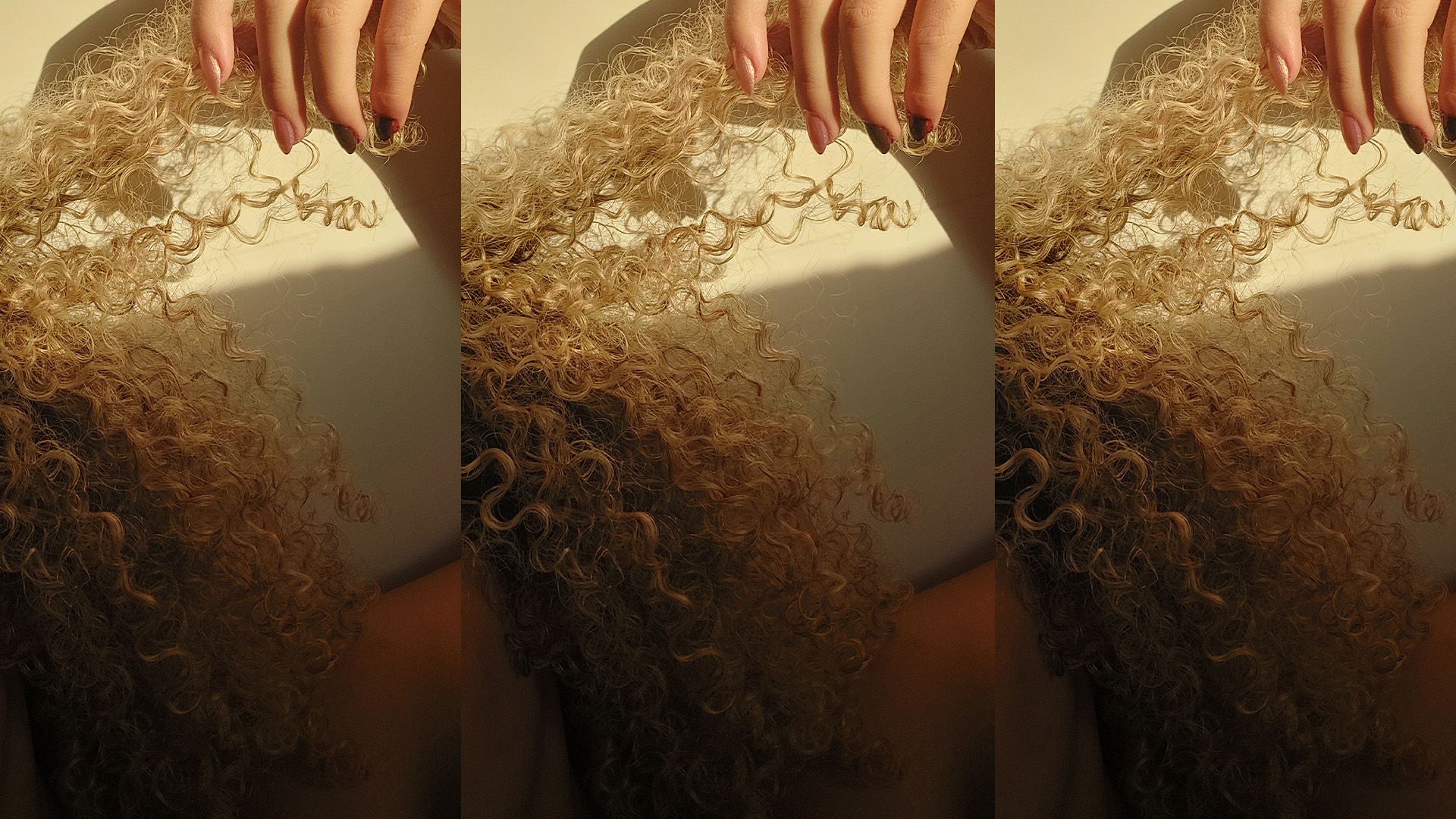
From curl patterns and porosity to density and moisture levels, every head of textured hair has its own characteristics and care requirements. Here, Chris Grimley, Owner of Fusion Hair Co, Founder of Texture Curl Academy and Textured Hair Specialist, explains the science behind curls, why no two curl patterns are the same, and how understanding hair's individual needs is the key to achieving healthier, stronger, more defined curls.
Why Are All Curl Patterns Different?
One question I get asked all the time is, ‘Why doesn’t my hair look like hers?’. The simple answer is because curls are as individual as fingerprints. No two heads of textured hair are ever exactly the same, and that’s one of the things I love most about working with curls every day. A client’s curl pattern is determined long before you reach for a shampoo, styling cream or diffuser It’s writing into their DNA. Genetics, the shape of the hair follicle, and the structure of the hair itself all work together to create the waves, curls, coils or kinks that make hair unique.
Where Does the Curl Come From?
Every strand of hair begins its journey beneath the surface of the scalp inside the hair follicle. Think of the follicle as the blueprint of the curl. Straight hair usually grows from a nice round follicle, allowing the hair to grow evenly. Curly and coily hair however, grows from follicles that are more oval or slightly flattened. That different shape causes the strand to bend and curve as it grows, creating everything from loose waves to tight coils. Curly hair is also flatter in shape than straight hair, which means every twist and turn creates little points where the hair is naturally more delicate. That’s why textured hair often needs a little more love and a gentler approach to keep it healthy and strong.
Curl Type 101: The Different Factors Involved
We often hear people talking about 2A, 3C or 4C curls, and while curl typing can be a helpful starting point, it certainly isn’t the whole story. I’ve worked with countless clients who technically have the same curl pattern, but whose hair behaves completely differently. That’s because there are so many other factors involved.
- Porosity tells us how easily hair absorbs and holds onto moisture.
- Density is simply how much hair is growing from the scalp.
- Strand thickness helps determine which products and styling techniques will work best.
- Elasticity shows us how well the hair stretches and bounces back without snapping.
Understanding these characteristics is often far more useful than focusing on curl type alone.
Why Does Textured Hair Need So Much Moisture?
This is probably one of the biggest differences between straight and textured hair. Our scalp naturally produces an oil called sebum, which is designed to keep the hair moisturised and protected. On straight hair, that oil can travel quite easily from root to tip. With curls and coils though, every bend and every twist slows that journey down. By the time the oil reaches the ends, if it gets there at all, those ends are often crying out for moisture. That’s why textured hair is naturally drier and can become brittle of break more easily if it isn’t properly hydrated. This is why I always say moisture isn’t a luxury for curls, it’s a necessity. Hydrating shampoos and conditioners, a good curl cream and either a gel or mousse to lock moisture in, and treating the hair gently will make a world of difference to its health, shine and definition.
For me, healthy textured hair has never been about following every trend on social media. It’s about understanding hair. Once you know how hair is built, how porous it is, how dense it is, and what it needs to stay hydrated, everything starts to make much more sense.
You Might Also Like:
A Brief History of Curly Hair – 100 Years of Getting in Formation
The Benefits of Being A Curl Specialist


square.jpg)
