The language used in the salon chair can be just as transformative as the cut itself. From consultations to classifications, the words stylists choose have a lasting impact on how clients feel about their hair, particularly those with textured, curly and coily hair who may have faced years of misunderstanding or exclusion within the industry.
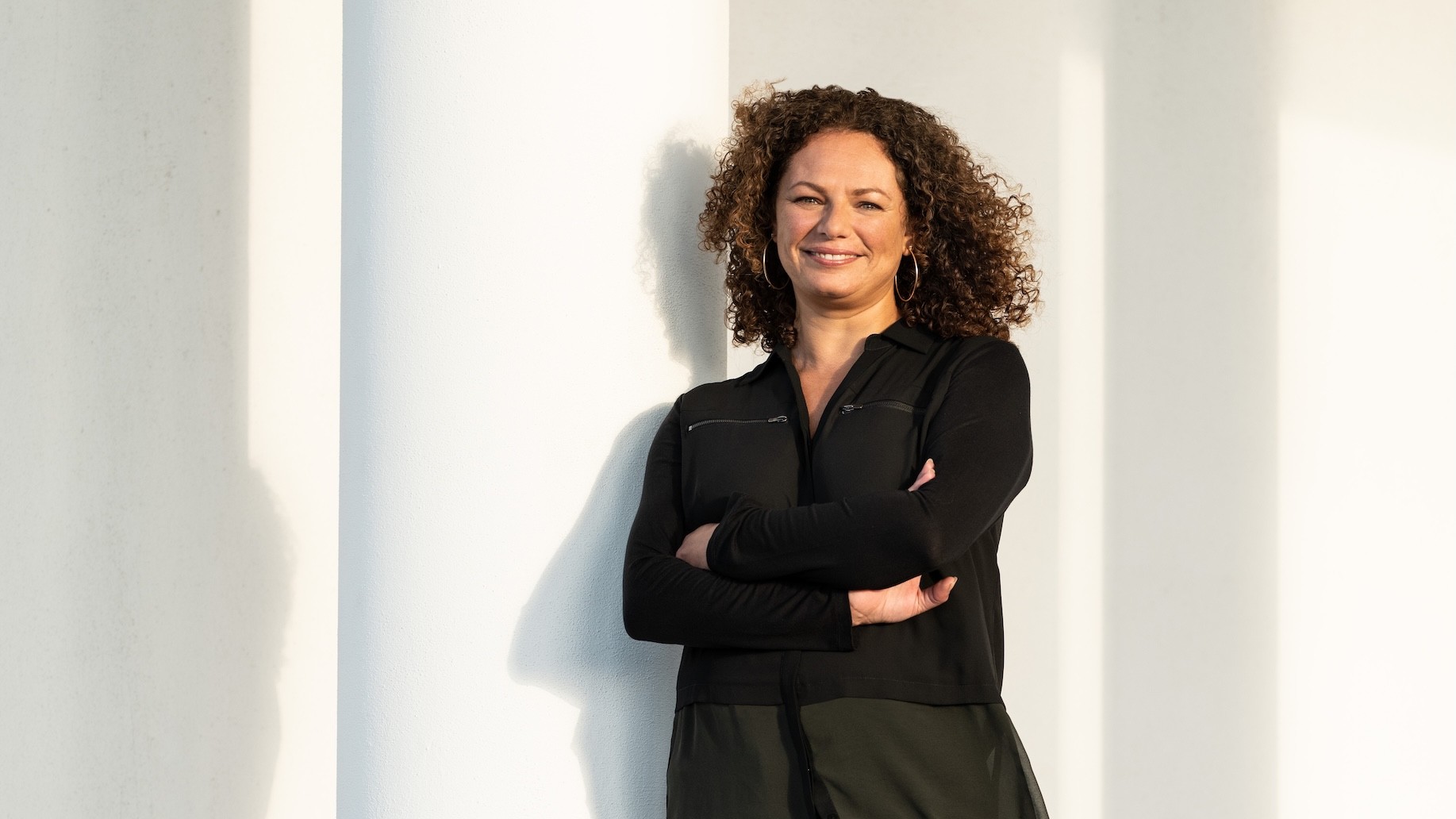
In this HJ Voicenote, Jessica Parrish, Founder and Chief Curl Officer at Shedid and Parrish, tells us why inclusive language matters, challenges outdated terminology and hair typing systems, and explains how embracing textured hair education isn’t just about representation – it’s a powerful commercial opportunity for salons on the high street.
"Hair is an extension of the self. When you have textured hair and people have commented on it over the years or you’ve had negative experiences, it contributes to how you feel about yourself. As stylists if we refer to hair in a negative or positive light, it has a huge impact on our clients.
I wouldn’t want to demonise anyone, as language is so personal, but there are negative words like ‘unruly’, ‘frizzy’ and ‘messy’, that I avoid. Again, classifications and systems can be useful for general guidance, but they’re not something I’d use in a consultation – I want it to be more personalised. There can be three to four curl patterns on one head of hair, so you want to get to the root of how clients approach their own hair rather than using a one-size-fits-all system.
I know some professionals and consumers find the Andre Walker classification system useful, but it feels restrictive to me. The system puts the most complex hair type into one bracket – so 4 A, B and C – but there are so many more hair types that exist within that bracket. It isn’t used as frequently, but I prefer the LOIS system as it goes more in depth – it looks at the size of the strand, the mass/quantity of hair, the shape, the look of the curl and the texture of the curl (whether it’s candy-floss texture or if it’s taut) and also the shine (whether the sun bounces off the hair or not).
"When you’re in a consultation, deal with the human in front of you. If you feel out of your depth, ask your client what they do with their hair. Don’t take it personally if you don’t know something, you can just ask."
Jessica Parrish
Personally, I use the term textured hair rather than Afro hair because I am referring to the texture of the hair strand. There are so many textures, so for me it’s a better umbrella term. In addition, I think of Afro as a hairstyle and I feel that people attribute Afro hair to a skin tone. But people of all skin tones can have super-tight curls or coils!
As a brand we are really focused on growing the amount of texture specialists on the high street. Here’s a compelling statistic, particularly in 2026’s economic climate – if you added 50 curly clients to your salon per month (between 1-2per day) then it could add £135k to your annual revenue!
No one can be a specialist in everything, but at the very least you should be able to look after the health of someone’s hair – to shampoo, condition and style all hair types. If you want weaves, braids and even colour, then I think it’s perfectly acceptable for clients to visit specialists. Afro-specialist salons and barbershops have an important place in communities, but why are there only 239 salons who cater to curls and texture on the high street? There should be 3000 as a bare minimum, and that’s only if you’re catering to clients with black and mixed-heritage hair, let alone curls from different races.
When you’re in a consultation, deal with the human in front of you. If you feel out of your depth, ask your client what they do with their hair. Don’t take it personally if you don’t know something, you can just ask."