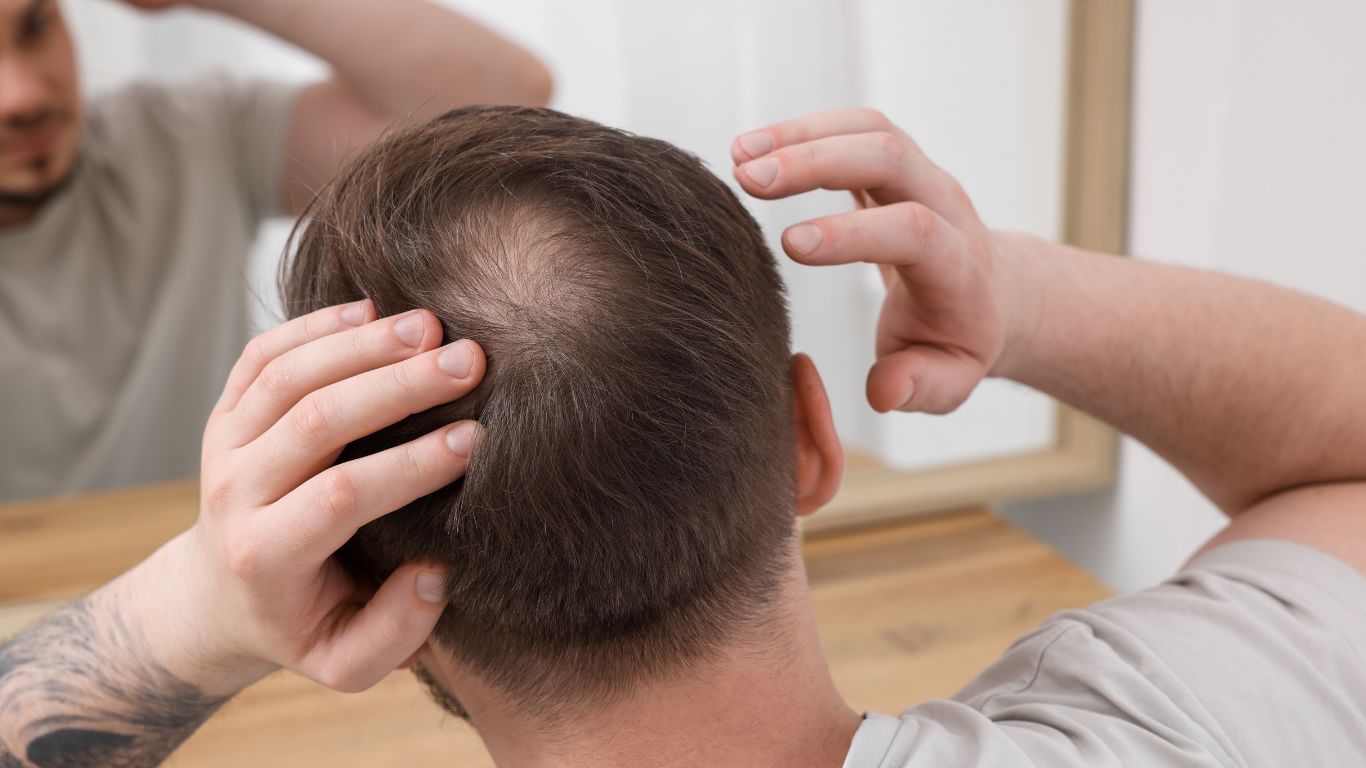
Originally posted on Modern Barber: Everything You Need to Know about Male Hair Loss
We talk to the experts about the treatments you can offer to your male clients who are experiencing permanent hair loss to ensure they (and your business) feel the full benefit...
Time to Get Talking
Male hair loss has traditionally been a taboo topic, but with the self- care industry growing in recent years, clients are beginning to recognise that as consumers, they have more control than ever before. Despite this, broaching the conversation as a barber can still be a little tricky, and as Miles Wood-Smith, Master Barber and Creative Director at Murdock London explains: “Every client is different, so you’ll need to adjust your approach from person to person.”
Environment is also a key factor when it comes to discussing hair loss; “Some salons and barbershops can be small and therefore not an inviting place to share feelings,” says Rob Wood, one of the Founders of Novo Cabelo. Leading the conversation with a simple question can help make it feel like a safe space, creating an opening for discussion.
Barbering and men's hair services have historically been less treatment-focused than hairdressing, something Ryan Lewis, STMNT Advocate and founder of Club13 in Hull believes is a result of walk-in appointments. “This means there has been significant time restraints, leading to a rushed, or overlooked, consultation process,” he says. However, you can easily incorporate treatment-talk and scalp care at the start of your appointments, meaning it remains prioritised if you’re short on time.
It Starts with the Scalp
Education is Key
Although male haircare is becoming more mainstream, there is still work to be done to ensure clients are empowered to make the best choices for themselves.
What are the Different Treatments and Services to Address Male Hair Loss Concerns?
|
Service |
Pros |
Cons |
|
Hair System |
Non-surgical and pain-free. Clients get to experience a full head of hair in just two hours – there’s no long wait time, no further medication and no uncertain results |
A slight change in haircare regime is required, may require regular maintenance and replacements |
|
Hair Transplant |
If the transplant is successful, clients should not require further treatment |
Expensive for clients, takes time for scalp to recover and hair to grow, clients may need to commit to a daily care regimen |
|
Scalp Micropigmentation |
Great for clients that like a clean- shaven look |
The treatment does not offer much versatility |
Boost your Business
Understanding Hair Replacement Systems
Adam Bennett, Creative Director at Oxéa London, explains that modern hair replacement systems offer a non-surgical solution for clients experiencing hair loss, providing a realistic, full head of hair without the recovery time associated with a transplant. Lightweight and designed for everyday wear, advances in manufacturing technology mean they are now far more realistic than traditional wigs or hairpieces.
Hair systems are highly customisable, making them suitable to a range of clients. “Systems are available in a variety of colours, densities and styles, with bespoke hairlines and customisation options allowing them to be tailored to each individual,” explains Adam.
“During the consultation, the client's hair type, colour and desired density are assessed, with some adjustments made during manufacturing and others, such as custom colouring, carried out in the studio.”
Who Are Hair Replacement Systems Suitable For?
According to Adam, anybody experiencing hair loss is a good candidate. “We quite often fit ‘partial systems’ to deal with thinning areas before heading for a full one., and we have clients for whom we fit very small systems to deal with alopecia,” she shares.
An initial fitting typically takes up to two hours, while ongoing maintenance is tailored to the individual. Some clients prefer to remove their system daily, while others return to the salon weekly or fortnightly for maintenance. Clients can also be taught how to care for their system at home. Depending on the frequency of maintenance, hair density and base type, a system can last anywhere from one month to a year.
Another benefit of hair systems is that they can be used alongside other treatments. “We have a partnership with a trichologist which allows us to present a holistic plan to our clients – quite often understanding what is causing the thinning can really help but takes some time. Having a hair system provides an instant solution to loss of confidence.”
What to Know Before Getting Started with Hair Replacement Systems
Although hair loss can be a sensitive subject, hairstylists and barbers are well placed to start conversations with their clients. Asking an open-ended question such as, 'How do you feel about your hair?' can help clients feel comfortable sharing any concerns about their density or hairline.
For hairdressers and barbers interested in introducing hair replacement, building relationships with specialist providers is a good starting point. Many offer training courses, ranging from group sessions to more tailored, one-to-one education, helping barbers develop the skills and confidence to introduce the service.

Josie Jackson
Josie is a content writer at Professional Beauty, supporting the team with content for the print magazine, website and social media channels. With over four years' experience as a health and beauty journalist, Josie is dedicated to creating informative yet accessible content for all beauty professionals.
